
ZhongQi Growth
Choosing reliable Roof Straps manufacturers in China requires more than comparing prices or browsing polished product pages. These components may secure roofing materials, support temporary covers, or assist with transport and installation work. Their performance depends on webbing strength, stitching quality, buckle design, corrosion resistance, and production consistency. A strap that looks strong in a catalog may behave differently under rain, heat, tension, or repeated handling.
This guide examines leading Chinese manufacturers through practical purchasing criteria. It considers factory experience, material traceability, testing procedures, customization capacity, export records, and communication quality. Buyers should request technical datasheets, load ratings, sample products, inspection reports, and clear packaging details. Factory photographs can help, but an independent inspection offers stronger evidence. Certifications also require careful checking because a logo alone proves little.
The review focuses on manufacturers that demonstrate dependable processes, not merely attractive claims. It also considers whether suppliers understand roofing applications and can recommend suitable widths, lengths, protective coatings, and fastening methods. Some companies may excel at large-volume orders, while others provide better support for smaller projects. No shortlist is perfect. Supplier information changes, and published specifications may need confirmation before purchase. This is an important limitation.
By comparing verifiable strengths and possible weaknesses, readers can narrow their options with greater confidence. The goal is not to name the cheapest source. It is to identify manufacturers capable of delivering safe, consistent, and application-appropriate Roof Straps for professional use.
Roof straps are galvanized or stainless-steel connectors that tie roof rafters or trusses to wall plates. They help create a continuous load path from the roof to the foundation. FEMA’s Home Builder’s Guide to Coastal Construction, FEMA P-499, identifies this connection as essential for resisting wind uplift and improving structural continuity.
Small part. Large consequence.
A strap does not simply “hold down” a roof. It transfers calculated forces through nails, timber, masonry, and concrete. ASCE 7-22 uses a 700-year mean recurrence interval for ultimate wind speeds in many Risk Category II designs. Therefore, strap capacity must match local wind exposure, roof geometry, building height, and connection spacing. A thicker strap may still fail if the fasteners are too short or poorly installed.
When evaluating Chinese manufacturers, buyers should request tested load values, steel grade, coating thickness, corrosion data, and production traceability. Look for documentation linked to recognized standards, not only attractive catalogue numbers. On site, a common mistake is mixing one strap with unapproved nails. That weakens the entire connection. I have also seen installers overlook edge distances, especially near narrow wall plates. The uncomfortable detail is simple: a strap can look strong and still be wrong. Independent testing, batch records, and clear installation drawings provide more dependable evidence than marketing language.
Choosing among China’s roof strap manufacturers requires more than comparing prices or polished websites. Names matter less than evidence. A capable supplier should explain steel grade, coating thickness, strap dimensions, and rated load performance. Ask for recent test reports, not generic certificates. Reports should identify the tested product, batch, laboratory, and test method.
A factory audit can reveal practical details. Check whether coils are stored indoors and labeled by batch. Observe stamping, hole punching, edge finishing, and packaging. Sharp edges or uneven holes may create installation problems.
Request production samples and measure them independently. Compare thickness with the drawing. Verify corrosion resistance through suitable laboratory testing and review quality records before placing a larger order.
Communication also exposes reliability. The supplier should answer technical questions clearly and confirm changes in writing. Check traceability from raw material to final cartons. Ask how rejected parts are separated and recorded. A strong manufacturer can provide inspection plans and corrective-action reports.
However, no supplier looks perfect. I would treat delayed documents, vague load claims, or unexplained sample differences as warning signs.
One weakness deserves discussion, not automatic rejection. Sometimes a smaller factory offers careful control, but its capacity may be limited. Confirm tooling, monthly output, lead times, packaging strength, and after-sales responsibility before choosing a long-term partner.
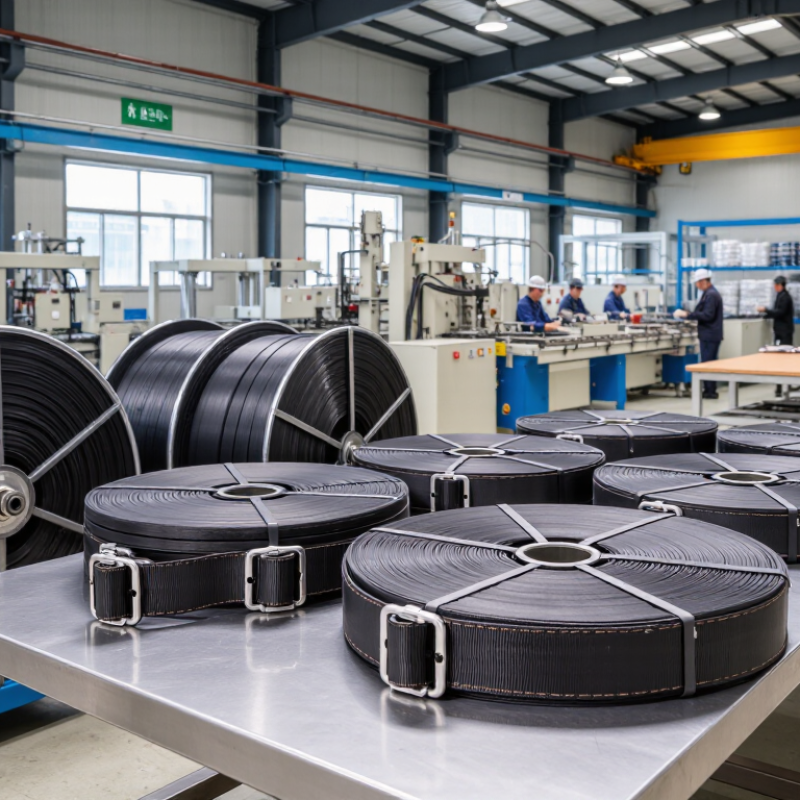
China’s roof strap market is led by manufacturers with strong control over materials, stitching, and load testing. The most capable producers usually operate in Zhejiang, Jiangsu, and Guangdong, where textile and metal-processing supply chains are mature. They supply polyester roof straps, adjustable tie-down systems, buckle assemblies, and corrosion-resistant hooks for construction and transport applications.
Leading Chinese manufacturers stand out through measurable production details. They specify webbing width, breaking strength, elongation, and stitching density instead of using vague “heavy-duty” claims. Better factories test samples from each production batch, inspect buckle edges, and record tensile results before shipment. Many also support private-label packaging, small trial orders, and design changes for different roof structures. These services help overseas buyers reduce fitting problems on real job sites.
Quality is not always consistent. Some suppliers present impressive samples but offer weaker webbing during mass production. A careful buyer should request batch reports, traceability records, and photographs of stitching under tension. Field experience shows that sharp metal edges, poor seam placement, and moisture exposure can shorten service life quickly. No factory is perfect. Even experienced manufacturers may need clearer installation feedback from customers. Reliable partnerships grow through repeated inspections, practical testing, and honest discussion of failures.
China’s leading roof strap manufacturers typically supply galvanized steel hurricane straps, rafter clips, truss connectors, hold-downs, and perforated metal ties. Some also provide stainless-steel versions for coastal projects. According to the World Steel Association, China produced about 1.02 billion tonnes of crude steel in 2023. This large material base supports competitive stamping and coating capacity. However, low price does not prove reliable performance.
Better manufacturers publish steel grade, thickness, hole diameter, coating weight, and tested load values. Common materials include galvanized carbon steel and stainless steel. Buyers should check compliance with ASTM A653, ASTM A1008, EN 14545, or relevant Chinese standards such as GB/T 13912. Wind resistance may also require design references from ASCE 7 or regional building codes. These standards address different risks. They are not interchangeable.
A serious supplier should offer test reports, installation drawings, batch traceability, and salt-spray results. Factory checks should include measuring strap thickness with a micrometer, inspecting punched holes, and reviewing coating adhesion. The 2023 Global Status Report for Buildings and Construction highlights the continuing scale of building activity worldwide, increasing demand for dependable structural components. Yet certificates can be incomplete. I would question any supplier that gives only a catalog image and one generic load number. Actual capacity depends on fasteners, timber quality, installation direction, and edge distance. The details matter.
Choosing among China’s leading roof strap manufacturers requires more than comparing catalog prices. Buyers should match the supplier’s production experience with the project’s wind, snow, and corrosion conditions. Ask for steel grade, thickness, coating type, and tested load capacity. A reliable manufacturer should provide recent, traceable test reports rather than generic certificates.
Inspect the factory, physically or through an independent auditor. Look for controlled stamping, consistent hole placement, coating inspection, and calibrated testing equipment. Request samples from normal production, not specially prepared pieces. Check sharp edges, rust protection, dimensions, and fit with the intended fasteners. Small differences can cause installation delays.
Communication also reveals supplier quality. Can the sales engineer explain tolerances and installation limits clearly? Can the factory identify each batch by date and material source? Confirm packaging, inspection records, lead times, and export documentation before placing an order. Never rely only on a polished website.
A lower quote may hide thinner steel or weaker coating. That mistake becomes expensive on a real roof. Still, no checklist is perfect. Begin with a small trial order, record defects, and compare delivered parts against the approved sample. Require written corrective action when something fails. This practical evidence is often more valuable than impressive claims about being a top manufacturer.
This practical sourcing benchmark assigns the highest priority to verified load performance and compliance documentation. Buyers should also compare corrosion protection, dimensional consistency, production traceability, minimum order quantity, and lead-time reliability before selecting a Chinese roof straps supplier.
Roof straps connect rafters or trusses to wall plates. They create a continuous load path toward the foundation. Small connector. Major consequence.
They transfer uplift forces through nails, timber, masonry, and concrete. Capacity depends on wind exposure, roof shape, building height, and spacing.
No. Short fasteners can still cause failure. Poor installation can weaken a thick strap. Appearance is not proof.
Common materials include galvanized steel and stainless steel. Buyers should check steel grade, thickness, coating, and corrosion resistance.
Request tested load values, material records, coating data, and batch traceability. Recent reports are more useful than attractive catalog claims.
Check hole placement, sharp edges, dimensions, coating quality, and fastener fit. Ask for samples from ordinary production. Special samples can mislead.
Look for controlled stamping, calibrated testing equipment, and recorded inspection results. Webbing products should show width, strength, elongation, and stitching density.
A trial order reveals defects before large production begins. Compare delivered parts with the approved sample. Record problems carefully.
Installers may use unapproved nails or ignore edge distances. Narrow wall plates need special attention. Clear drawings can prevent avoidable errors.
Not always. A low price may hide thinner steel or weaker coating. No checklist catches everything. Independent inspection remains worthwhile.
Roof Straps are essential fastening components used to secure roofing materials, structural elements, cargo, or temporary coverings against movement caused by wind, vibration, and daily handling. When sourcing them from China, buyers should evaluate manufacturers based on material quality, production consistency, load capacity, corrosion resistance, customization capabilities, and quality-control procedures. A reliable supplier should be able to explain its manufacturing process, testing methods, packaging practices, and delivery capabilities clearly.
Leading Chinese manufacturers typically offer galvanized steel, stainless steel, and coated metal Roof Straps in various widths, thicknesses, lengths, and buckle or fastening configurations. They may also support custom dimensions and packaging for different construction, agricultural, transportation, and industrial applications. Buyers should confirm that products meet relevant international or regional standards, request samples and technical documents, compare certifications, and review communication and after-sales support. Selecting the right supplier requires balancing product performance, total cost, production capacity, lead time, and long-term reliability rather than choosing solely on price.
