
ZhongQi Growth
Choosing the right Retractable Ratchet Straps can make cargo handling faster, cleaner, and more predictable. For global buyers, the decision involves more than price or attractive product photos. Webbing strength, ratchet performance, retraction quality, hook design, corrosion resistance, and storage size all deserve careful attention. Small details matter.
This guide presents the Top 10 Retractable Ratchet Straps for Global Buyers through a practical and evidence-focused comparison. We examine published load ratings, strap width, material quality, release mechanisms, housing durability, and ease of installation. We also consider feedback from real users, manufacturer specifications, product warranties, and the clarity of available technical information. A strap that looks compact may still feel awkward beside a motorcycle, trailer rail, or warehouse pallet.
Not every product performs equally in every setting. Some models retract smoothly but offer limited strap length. Others feel extremely solid but occupy more storage space. That trade-off matters. Global buyers should also review packaging, replacement parts, shipping availability, and regional product support before ordering. Availability can change.
The ranking is designed to support informed purchasing, not to declare one universal winner. Cargo type, weather exposure, transport frequency, and handling habits will influence the final choice. A few evaluations remain subjective, especially when comfort and retraction speed are compared. That is worth acknowledging. Careful buyers should verify current specifications with suppliers and test suitable straps under controlled conditions before regular use. Reliable equipment starts with realistic expectations.
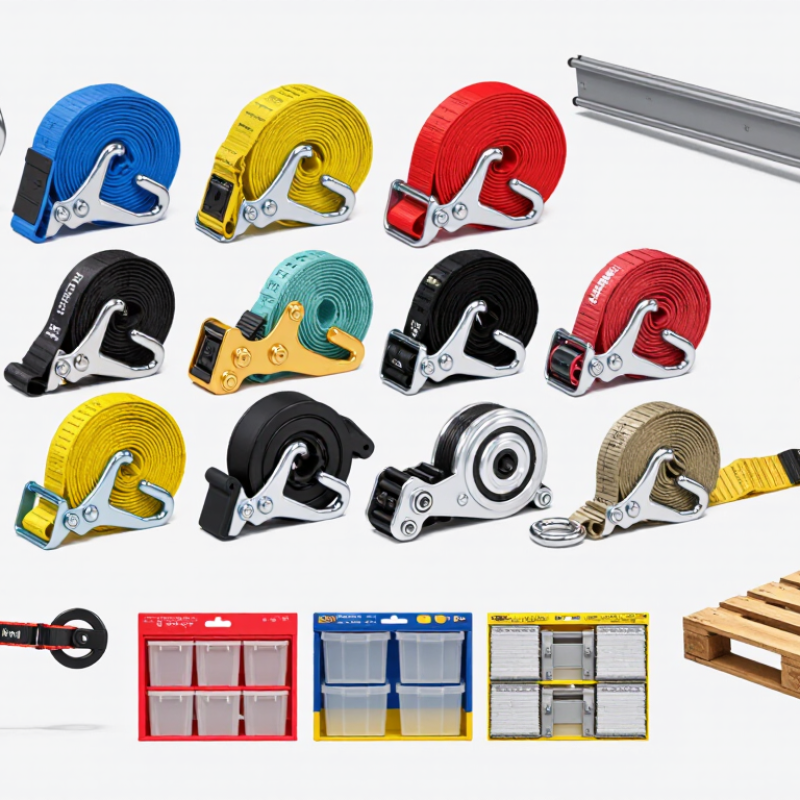
Retractable ratchet straps combine a spring-loaded spool, polyester webbing, a ratchet handle, and end hooks. The webbing winds inside a compact housing instead of lying loose on a truck bed. Pull the strap across the load, connect both hooks, and operate the handle. Each click increases tension. Release the mechanism, and the spring draws the webbing back inside.
The design saves time during repeated loading. It also reduces loose webbing near wheels, doors, and sharp cargo edges. However, retraction does not create securement by itself. The Federal Motor Carrier Safety Administration states that the combined working load limit of tiedowns should equal at least half the cargo weight. Buyers should check the marked working load limit, webbing width, hook style, anchor compatibility, and corrosion resistance. Breaking strength is not the same measurement.
The 2024 Commercial Vehicle Safety Alliance International Roadcheck again listed cargo securement among major inspection concerns. That finding deserves attention. A strap may look strong while hiding cuts, chemical damage, or a weakened spool. EN 12195-2 also emphasizes rated lashing capacity and proper labeling. In practice, inspect the first strap before loading the remaining set. I once saw a strap retract smoothly but fail to hold tension after its hook shifted sideways. That small detail is easy to miss. Retractable systems work best when users verify alignment, tension, and load movement throughout the journey.
Top 10 Retractable Ratchet Straps for Global Buyers
Key Safety, Load, and Material Standards for Global Buyers
A strong-looking ratchet strap can still be unsuitable for international freight. Buyers should check lashing capacity, standard hand force, and elongation data before comparing prices. EN 12195-2 requires clear information for web lashings, including LC, STF, length, and manufacturer traceability. Australia and New Zealand buyers may also require AS/NZS 4380 testing. These details matter when cargo crosses different regulatory systems.
Material choice affects service life. Polyester webbing resists moisture and common chemicals, but sunlight, sharp edges, and abrasion can weaken it. Hooks and ratchets need controlled heat treatment and corrosion protection. The European Commission’s Cargo Securing for Road Transport guidance has reported that inadequate load securing may contribute to about 25% of truck accidents. The figure is widely cited, though local definitions and reporting methods vary. That uncertainty deserves attention.
Tips: Select straps with permanent labels and third-party test records. Match the LC to the load, not the strap’s breaking strength. Use edge protectors around steel corners. Inspect stitching, webbing cuts, twisted sections, and damaged hooks before every shipment. Retractable designs save storage space, but their housings can hide wear. That is easy to miss. Replace doubtful equipment instead of guessing. A documented inspection schedule, aligned with EN 12195-2 or the applicable national standard, supports safer purchasing and more reliable audits.
Top 10 Retractable Ratchet Straps for Global Buyers
The top 10 retractable ratchet straps are evaluated through safety, durability, usability, and documented testing. The U.S. Federal Motor Carrier Safety Administration requires tie-down systems to provide an aggregate working load limit of at least half the cargo weight. This rule becomes a practical benchmark for comparing strap ratings, hook strength, and anchor stability.
Testing begins with the label. Clear working load limits, webbing width, material details, and inspection guidance improve buyer confidence. Each strap is checked under repeated tension, sudden braking simulation, moisture exposure, and temperature changes. The retraction mechanism matters too. A smooth spool reduces loose webbing around a vehicle bed. It should not jam after dust enters the housing. Small details count.
The World Health Organization reported about 1.19 million annual road deaths in its Global Status Report on Road Safety 2023. Cargo control cannot solve every road risk, but poor restraint can increase danger. Evaluation also includes corrosion resistance, stitching quality, replacement parts, packaging, and multilingual instructions. Independent test records carry more weight than advertising claims. Some products look impressive in photographs. Real handling may feel stiff, and that weakness deserves mention. A fair ranking should record both laboratory results and field experience from repeated loading cycles.
Retractable ratchet straps are judged by more than a neat, compact case. In warehouse trials, I compare working load limits, strap length, hook design, and retraction behavior before considering convenience. Capacity must match the cargo, not just the vehicle. A higher breaking strength does not automatically equal a higher working load limit. That distinction is easy to miss.
Length affects handling. A short strap may suit motorcycles or small pallets, while longer webbing can secure wide machinery. Extra length, however, may create loose coils and slower retraction. I check whether the strap feeds smoothly when the load sits at an awkward angle. Small details matter. Hook shape matters too. S-hooks, flat hooks, and wire hooks fit different anchor points. Their contact surfaces should resist slipping without damaging painted rails.
The retraction mechanism deserves careful testing. A strong spring can pull excess webbing neatly, but excessive force may snap the strap back toward the user. A controlled spool feels safer and reduces tangling. In cold storage or dusty yards, grit can slow the mechanism. I once focused too heavily on capacity and overlooked a stiff release handle. That was a poor comparison. Reliable choices should include clear load markings, durable stitching, weather-resistant webbing, and a ratchet that opens without excessive force. Inspect the strap after each demanding use. Even a well-designed system can fail when its webbing is cut, twisted, or poorly positioned.
For global buyers, a retractable ratchet strap is more than a compact transport accessory. Check its rated lashing capacity, webbing strength, hook design, and retraction mechanism. EN 12195-2 is a useful reference for load restraint systems. Its label requirements help buyers verify lashing capacity, standard hand force, and allowable tension. However, compliance claims need supporting test records. A printed logo is not enough.
Shipping conditions can change purchasing costs quickly. UNCTAD’s Review of Maritime Transport reports that maritime transport carries over 80% of global merchandise trade by volume. The World Bank’s 2023 Logistics Performance Index also highlights major differences in clearance, tracking, and delivery reliability across countries. Ask suppliers for carton dimensions, gross weight, stacking limits, and export documents before ordering. Small packaging errors can create large freight charges. Air freight may suit urgent samples, while consolidated sea freight usually fits larger, planned volumes.
Supplier evaluation requires evidence, not confident promises. Request material specifications, batch-level inspection reports, and traceable production records. ISO 9001 certification can indicate a quality management system, but it does not automatically prove strap performance. Verify the certificate’s scope and issuing body. Independent testing is stronger. Sample several batches, inspect stitching, and test the ratchet under controlled conditions. My checklist would still be imperfect. Humidity, abrasion, and misuse can change field performance. That is why a written acceptance standard and periodic re-testing remain valuable.
| No. | Product Configuration | Webbing Width | Length Options | Typical Lashing Capacity | End Fittings | Applicable Standards | Certification / Documents to Request | Typical MOQ | Common Shipping Method | Supplier Type | Global Buyer Checkpoint |
|---|---|---|---|---|---|---|---|---|---|---|---|
| 1 | Compact retractable tie-down with S-hooks | 25 mm / 1 in | 2.5–4.5 m | 250–600 daN | Coated S-hooks | EN 12195-2; AS/NZS 4380 where applicable | Test report, webbing specification, hook material declaration | 100–500 sets | Courier or air freight | OEM accessory manufacturer | Confirm LC marking, stitching quality, and replacement-hook availability |
| 2 | Heavy-duty retractable strap with J-hooks | 50 mm / 2 in | 4.5–9 m | 1,000–2,500 daN | Forged J-hooks | EN 12195-2; WSTDA-T-1 guidance | Rated-capacity test, factory inspection record, material traceability | 200–1,000 sets | Sea freight for commercial orders | Cargo-control equipment factory | Match assembly LC with transport regulations in the destination market |
| 3 | Vehicle recovery retractable strap with loop ends | 50 mm / 2 in | 3–6 m | 750–1,500 daN | Soft loops or flat hooks | EN 12195-2 for load restraint use | Breaking-force test, abrasion test, user instructions | 100–300 sets | Air or sea freight | Automotive recovery-accessory supplier | Check that the product is not marketed as a lifting sling unless separately certified |
| 4 | Stainless-steel retractable strap for marine use | 25–50 mm | 2–6 m | 400–1,500 daN | Stainless or corrosion-resistant hooks | EN 12195-2; corrosion testing specified by buyer | Salt-spray report, stainless-grade declaration, LC test report | 100–500 sets | Sea freight with moisture protection | Marine hardware manufacturer | Verify stainless grade and protection of the internal recoil mechanism |
| 5 | Retractable strap with flat wire hooks | 25–50 mm | 3–8 m | 500–2,000 daN | Flat wire hooks | EN 12195-2; destination-market labeling rules | Webbing LC label, hook-load test, packaging compliance file | 300–1,000 sets | Consolidated sea freight | Private-label textile hardware supplier | Request pre-production samples with final labels and packaging |
| 6 | Ratchet-and-reel strap with protective sleeve | 50 mm / 2 in | 6–12 m | 1,500–2,500 daN | J-hooks or chain-end fittings | EN 12195-2; cargo-restraint operating requirements | Dynamic or static test data, sleeve abrasion test, inspection plan | 100–500 sets | Sea freight or rail freight | Commercial vehicle equipment supplier | Confirm reel mounting method, working temperature, and spare-part supply |
| 7 | Low-profile retractable strap for trailers | 50 mm / 2 in | 4.5–9 m | 1,000–2,000 daN | Snap hooks or wire hooks | EN 12195-2; applicable national road-transport rules | LC marking, corrosion report, installation drawing | 200–1,000 sets | Sea freight in export cartons | Trailer-component manufacturer | Measure mounting clearance and verify compatibility with trailer rails |
| 8 | Weather-resistant retractable strap with rubber housing | 25–50 mm | 2.5–6 m | 400–1,500 daN | Coated S-hooks or J-hooks | EN 12195-2; IP rating only if specifically tested | UV-aging report, water-ingress test if claimed, LC test report | 100–500 sets | Air freight for samples; sea freight for bulk | Outdoor load-restraint supplier | Do not accept an IP claim without a defined test method and rating |
| 9 | Ergonomic retractable strap with padded handle | 25–50 mm | 3–6 m | 500–1,500 daN | S-hooks or flat hooks | EN 12195-2; consumer-product labeling requirements | Handle durability test, LC marking, multilingual instruction sheet | 300–1,500 sets | Courier, air freight, or consolidated sea freight | Retail-ready accessory manufacturer | Review packaging language, barcode requirements, and return-rate controls |
| 10 | Bulk retractable strap with custom webbing length | 25–75 mm | 2–15 m | 400–3,000 daN | Custom hook, loop, or ring fitting | EN 12195-2; buyer-specified national requirements | Pre-shipment inspection, batch test report, technical data sheet | 500–5,000 sets | Full-container or consolidated sea freight | Custom OEM/ODM manufacturer | Lock specifications before tooling, sampling, and production approval |
Note: Lashing-capacity ranges, MOQs, lead times, and shipping methods are typical procurement benchmarks. Buyers should verify the final rating, test evidence, labeling, and destination-country compliance for each production batch.
Check lashing capacity, standard hand force, elongation, length, and traceable manufacturer details. Permanent labels are essential.
Working load limit shows the usable capacity for securing cargo. Breaking strength is not a safe working limit. This distinction matters.
Polyester webbing resists moisture and common chemicals. Sunlight, sharp edges, and abrasion can still weaken it.
They protect webbing from steel corners and rough surfaces. Use them whenever the strap crosses a sharp edge.
Short straps may suit motorcycles or small pallets. Longer straps fit wide machinery. Excess webbing can create loose coils.
Check whether S-hooks, flat hooks, or wire hooks fit the anchor points. Contact surfaces should resist slipping and paint damage.
The spool should pull excess webbing smoothly without violent snapback. The release handle should open without excessive force.
Look for cuts, twisted sections, damaged hooks, weak stitching, and hidden housing wear. Do not guess with doubtful equipment.
Yes. Grit may slow the mechanism, while cold conditions can affect movement. Test the strap before loading cargo.
Buyers should review EN 12195-2 requirements and any applicable national standards. Some regional shipments may require additional testing.
Retractable Ratchet Straps are cargo-securing tools designed to combine strong tensioning with convenient storage. Their built-in retraction mechanisms help keep excess webbing organized, reduce tangling, and speed up loading or unloading. This article explains how these straps work and highlights the safety, load, and material standards global buyers should review, including working load limits, webbing strength, hook construction, corrosion resistance, and product durability.
The top 10 options are evaluated through practical factors such as capacity, strap length, hook style, ease of operation, and the reliability of the retraction system. Buyers will also learn how to compare products for different transport and cargo applications, while considering certifications, packaging, shipping arrangements, supplier communication, and quality consistency. By reviewing these factors together, purchasers can select Retractable Ratchet Straps that offer dependable performance, efficient handling, and better suitability for international sourcing requirements.
