
ZhongQi Growth ZhongQi Growth

How to Choose the Right Polyester Slings?

Time:2026-10-23 Author:Madeline
0%

Choosing the right Polyester Slings is not a simple matter of selecting a bright color or matching a load number. The decision begins with the load’s weight, shape, center of gravity, and lifting environment. A sharp steel edge can damage webbing quickly. A low sling angle can increase tension dramatically. Moisture, chemicals, heat, and repeated bending also deserve careful attention.

Mike Parnell, a respected lifting and rigging educator, says, “A sling choice begins with the load, not the label.” This practical view keeps the discussion grounded. The rated capacity must match the hitch type, sling angle, and lifting configuration. A vertical lift, choker hitch, and basket hitch do not carry the same way. Read the tag. Inspect the body.

Look for cuts, melted fibers, pulled stitching, discoloration, and damaged fittings. Small defects matter. The sling may appear usable while its strength has already changed. Storage matters too. Keep Polyester Slings clean, dry, and away from sharp edges, direct heat, and aggressive chemicals. Never rely on appearance alone.

This guide examines material quality, working load limits, sling configurations, inspection habits, and application-specific risks. It also considers an uncomfortable point: choosing the cheapest sling can create higher costs later. Still, no checklist replaces trained judgment. Load behavior can surprise even experienced workers. When conditions are unclear, pause the lift and seek competent technical advice.
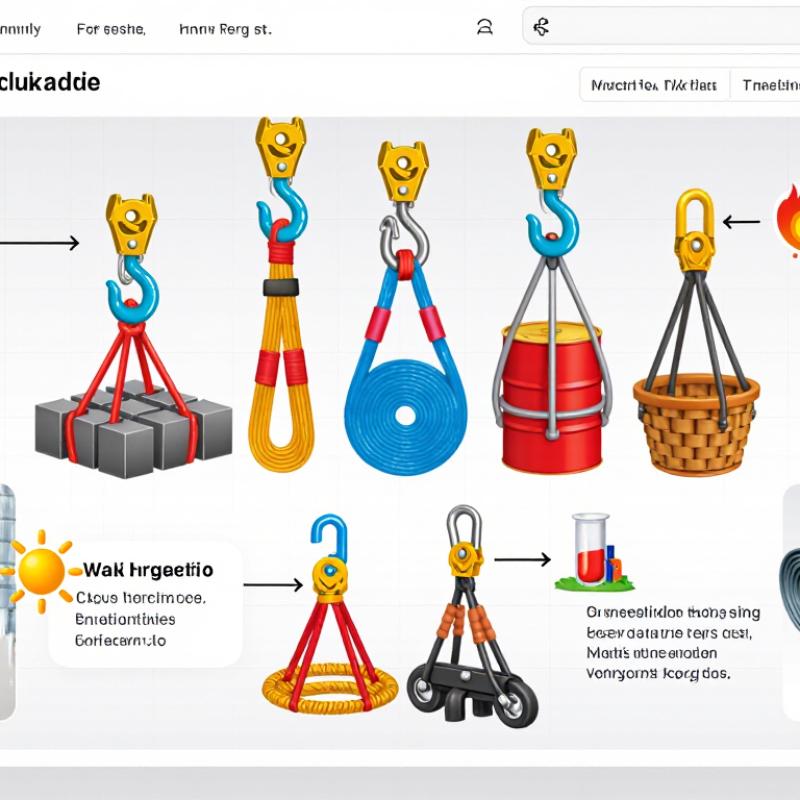
How to Choose the Right Polyester Slings?

Define the Load, Lift, and Working Conditions

Choosing a polyester sling begins with defining the load, not selecting a color or length. Record the load’s actual weight, shape, center of gravity, and available lifting points. A compact steel frame may weigh more than it appears. Never rely on visual estimates alone. Check the working load limit for the intended hitch, sling angle, and lifting arrangement.

The lift itself also matters. A vertical lift usually places less tension on the sling than a basket or choker hitch. As the sling angle becomes smaller, leg tension increases quickly. Keep the load balanced, protect the sling from sharp edges, and prevent sudden loading. A trial lift of a few centimeters can reveal tilting, slipping, or poor balance before the load travels.

Working conditions can change the correct choice. Inspect polyester webbing for cuts, melted fibers, heavy abrasion, chemical damage, and distorted stitching. Heat, moisture, and rough surfaces deserve extra attention. Polyester handles many routine applications, but it is not suitable for every chemical or temperature range. Follow the manufacturer’s capacity tables and applicable safety standards. When information is uncertain, stop and verify it with a qualified lifting professional. That pause may feel inefficient. It is often the safest decision.

Match Sling Capacity to Weight and Lifting Configuration

How to Choose the Right Polyester Slings?

A polyester sling must match the load and the lifting configuration, not only the lifting weight. Check the identification tag before every lift. It should show rated capacities for vertical, choker, and basket hitches. OSHA 29 CFR 1910.184 requires synthetic web slings to carry visible capacity markings. ASME B30.9-2023 also emphasizes inspection, protection, and correct configuration.

Sling angle changes leg tension sharply. For a two-leg lift, the WSTDA calculation gives approximately 0.58 times the load per leg at 60 degrees from horizontal. At 45 degrees, each leg carries about 0.71 times the load. At 30 degrees, that rises to the full load. Small angles are risky. A neat calculation can still be wrong.

Tips: Read the tag. Measure the load. Protect sharp edges. Keep the sling away from heat, chemicals, and dragging surfaces. Never assume a choker keeps its vertical rating.

In the field, I would also check whether the load can shift, tilt, or crush the sling. A basket hitch may appear efficient, but uneven loading can overload one side. Choker capacity often decreases because the sling tightens around the load. Use the manufacturer’s stated reduction, not memory. OSHA requires removal when cuts, burns, damaged stitching, or excessive wear appear. Polyester can look acceptable while internal fibers are weakened. That uncertainty deserves a slower lift, better communication, and a fresh inspection.

Choose the Appropriate Polyester Sling Type and Construction

Choosing a polyester sling starts with the lift, not the color or price.

Web slings suit smooth, balanced loads and fit easily around wide surfaces. Endless round slings conform to uneven shapes and spread contact pressure. Eye-and-eye slings offer useful connection options, especially in vertical or basket hitches.

I have found that the wrong type can twist under load, even when its rated capacity looks sufficient. That detail is easy to miss.

Construction matters as much as sling type.

A tightly woven web sling resists abrasion better than a loose, damaged weave. Round slings contain load-bearing fibers inside a protective jacket, so surface wear may hide internal damage.

Check the label for working load limits in the planned hitch, not only the straight-lift rating. Angles reduce capacity. Keep the sling aligned with the load path. Never force a fitting into a narrow eye. It should sit naturally.

Before use, inspect cuts, melted fibers, pulled stitching, chemical stains, and crushed sections.

Feel for hard or lumpy areas on round slings. Sharp edges need proper corner protection, not improvised cardboard. Clean polyester with mild soap and water, then dry it away from heat.

I sometimes see teams replace a sling too late because it “still looks usable.” That judgment is unreliable.

When doubt remains, remove it from service and ask a qualified person to assess the damage. Records can reveal repeated problems, such as poor storage or unsuitable hitch choices.

Check Safety Factors, Labels, and Compatibility

How to Choose the Right Polyester Slings?

Choosing a polyester sling starts with its safety factor, not its appearance. Check the rated capacity for the exact hitch: vertical, choker, or basket. A basket hitch may support more weight, while a choker can reduce capacity. Never treat these ratings as interchangeable. Leave room for movement, uneven loading, and sudden force. Do not guess.

Read the label before lifting. It should identify the material, length, rated capacity, hitch limits, and manufacturer or inspection information. If the label is faded, missing, or difficult to read, remove the sling from service until a qualified person verifies it. During inspections, look for cuts, melted fibers, pulled stitching, crushed sections, and chemical damage. A clean surface can still hide weakened fibers.

Compatibility also matters. Match the sling with hooks, shackles, and lifting points that have suitable shapes and capacities. Protect polyester from sharp edges with proper sleeves or corner guards. Keep it away from excessive heat, open flames, and chemicals that can attack synthetic fibers. In practical lifting work, small contact points often create large damage. I once saw a sling appear sound after storage, yet its edge had hardened from heat exposure. That reminder stays with me: labels guide the decision, but careful handling and honest inspection confirm it.

How to Choose the Right Polyester Slings? - Check Safety Factors, Labels, and Compatibility

Use this comparison as a selection guide. The marked Working Load Limit (WLL) must always come from the sling’s permanent identification label and the applicable manufacturer’s rated capacity chart.

Selection Dimension What to Check Typical or Standard Information Why It Matters Selection Recommendation
Sling Construction Flat web sling or endless/eye-and-eye round sling Flat web slings are commonly made from woven polyester webbing. Round slings use a polyester load-bearing core with a protective cover. Construction affects flexibility, contact area, abrasion resistance, and how the sling can be connected to the load. Select the construction that matches the load shape, available lifting points, and required hitch configuration.
Working Load Limit (WLL) Rated capacity for the exact hitch and lifting arrangement WLL is normally stated in tonnes or kilograms and may differ for vertical, basket, and choker hitches. A sling’s nominal size alone does not establish its safe lifting capacity. Choose a sling whose rated capacity is equal to or greater than the calculated load for the complete lifting arrangement.
Safety Factor / Design Factor Applicable regulation, standard, and product rating Many synthetic sling specifications use a minimum design factor of 5:1, while EN 1492-1 polyester webbing slings are commonly specified with a minimum factor of 7:1. The factor is a design relationship, not permission to exceed the marked WLL. It does not compensate for damage, misuse, or poor rigging. Confirm the governing standard and product documentation before comparing capacities from different markets.
Permanent Identification Label Material, WLL, length, manufacturer or traceability code, standard, and warnings A readable label should identify the sling and provide rated capacities for applicable hitch types. Labels should remain attached and legible. Without identification, the sling cannot be reliably matched to its rated capacity or inspection records. Reject if missing or unreadable Do not estimate capacity from color, width, or appearance.
Color Coding Whether the color system follows the applicable standard Common EN color coding includes purple for 1 tonne, green for 2 tonnes, yellow for 3 tonnes, gray for 4 tonnes, red for 5 tonnes, brown for 6 tonnes, blue for 8 tonnes, and orange for 10 tonnes or more. Color coding can support quick identification but may vary by standard, market, or product range. Use color only as a secondary check. The permanent label and capacity chart take priority.
Hitch Configuration Vertical, basket, or choker hitch A basket hitch may have a higher rated capacity than a vertical hitch. A choker hitch generally has a reduced capacity, often around 80% of the vertical rating when properly formed, but the manufacturer’s chart controls. Changing the hitch changes the force distribution and the effective WLL. Calculate capacity using the actual hitch shown in the lifting plan, not the highest value printed in a general table.
Load-Angle Effect Angle between sling legs in a multi-leg lift As the included angle increases, tension in each sling leg rises. At a 60° included angle, each leg carries approximately 58% of the load in a balanced two-leg lift; at 120°, each leg carries approximately 100%. Wide sling angles can create substantially higher leg tension and may overload the sling or lifting points. Prefer included angles of 60° or less where practical, and never use an angle outside the manufacturer’s rating.
Temperature Compatibility Ambient temperature, heat sources, molten material, and hot surfaces Polyester is generally suitable for many ordinary lifting applications, but its strength and serviceability are affected by excessive heat. Exact limits depend on the standard and product design. Heat can soften, melt, or degrade synthetic fibers even when visible damage is not immediately obvious. Follow the supplier’s temperature limits. Keep polyester slings away from flames, molten metal, welding spatter, and sharp hot edges.
Chemical Compatibility Contact with acids, alkalis, solvents, oils, and cleaning chemicals Polyester generally has good resistance to many mineral acids and common solvents, but strong alkalis and some concentrated chemicals can damage the fibers. Chemical damage may reduce strength without producing obvious cuts or broken yarns. Identify the exact chemical, concentration, temperature, and exposure time. Obtain compatibility confirmation before use.
Edge and Surface Protection Sharp corners, rough edges, burrs, abrasive surfaces, and small contact radii Polyester webbing and covers can be cut or abraded by sharp edges. Protective sleeves, corner guards, or suitable packing may be required. Point loading and edge cutting can cause sudden sling failure. Use edge protection whenever the load can cut, pinch, crush, or abrade the sling. Do not use improvised protection that can slip.
Connection Hardware Hooks, shackles, lifting eyes, and attachment points Hardware must have a compatible WLL, adequate contact radius, and geometry that does not cut or distort the sling. An underrated or poorly shaped connector can fail before the sling reaches its rated capacity. Ensure the sling sits correctly in the hook bowl or fitting and is not loaded on the tip, latch, or sharp edge.
Load Shape and Stability Center of gravity, balance, surface condition, and possible movement The load should remain stable throughout lifting, traveling, and landing. Uneven loads can place more force on one sling leg. Unbalanced loading can exceed the expected force in individual legs even when the total load is below the rated capacity. Locate the center of gravity, use suitable lifting points, and conduct a controlled trial lift before moving the load.
Inspection Condition Cuts, fraying, pulled stitches, abrasion, melted fibers, chemical damage, knots, and label condition Any visible damage, unauthorized repair, heat damage, or illegible identification requires removal from service until assessed by a competent person. Damage can reduce the sling’s capacity and may progress during lifting. Do not use a damaged sling. Inspect before each use and complete periodic inspections as required by the applicable rules.
Storage and Maintenance Clean, dry, ventilated storage away from sunlight, heat, chemicals, and sharp objects Slings should be stored off the floor and protected from contamination, moisture, ultraviolet exposure, and mechanical damage. Incorrect storage can accelerate fiber degradation and shorten service life. Clean according to the product instructions and allow wet slings to dry naturally before storage.

Important: This table is a general selection reference, not a replacement for the sling label, rated-capacity chart, lifting plan, applicable regulations, or inspection by a competent person. Never exceed the lowest-rated component in the complete lifting system.

Inspect, Use, Store, and Replace Slings Correctly

How to Choose the Right Polyester Slings?

Inspect, Use, Store, and Replace Slings Correctly

Choosing a polyester sling starts with the load, hitch type, and working load limit. Check the identification tag before every shift. It should show capacity, length, material, and manufacturer details. OSHA 29 CFR 1910.184 requires daily inspection of synthetic web slings. ASME B30.9 also emphasizes competent inspection and proper removal procedures.

Look closely. Missing tags are a serious concern.

During use, keep the sling aligned with the load’s center of gravity. Protect it from sharp edges, hot surfaces, chemicals, and sudden shock loading. Never tie knots or drag a sling across concrete. A low sling angle increases tension dramatically, even when the load weight stays unchanged. HSE recorded 138 worker fatalities in Great Britain during 2023/24. That figure covers many hazards, but it reinforces one practical truth: lifting controls cannot be casual.

Store slings clean, dry, ventilated, and away from sunlight, welding sparks, and corrosive substances. Hang them on rounded supports, not nails or rough hooks. Replace any sling showing cuts, melted fibers, pulled stitching, severe abrasion, chemical damage, or permanent distortion. Do not rely on washing to restore weakened fibers. This is where judgment can fail. A sling may look acceptable while losing strength internally. When doubt remains, quarantine it and ask a qualified person to assess it.

FAQS

What should I check before using a polyester sling?

Read the identification tag before every lift. Confirm the material, length, hitch ratings, and inspection details. If the tag is missing, stop.

Why does the lifting angle matter?

Smaller angles increase leg tension sharply. At 30 degrees from horizontal, each leg may carry the full load. Small angles are risky.

Are vertical, choker, and basket ratings interchangeable?

No. Each hitch has different capacity limits. A choker often reduces capacity, while a basket may support more weight.

How should I choose between web and round slings?

Web slings suit smooth, balanced loads and wide surfaces. Round slings fit uneven shapes and spread contact pressure more evenly.

What damage signs require removing a sling from service?

Remove slings with cuts, burns, melted fibers, pulled stitching, chemical stains, crushed sections, or excessive wear. Hidden damage is possible.

How can I protect a polyester sling from sharp edges?

Use proper sleeves or corner guards. Do not rely on cardboard or improvised materials. A small edge can cut load-bearing fibers.

How do I check sling and hardware compatibility?

Match the sling with hooks, shackles, and lifting points of suitable shape and capacity. Fittings should sit naturally, without forced alignment.

Can a sling that looks clean still be unsafe?

Yes. Round slings may hide weakened fibers beneath their jackets. Hard, lumpy areas deserve careful attention and qualified assessment.

How should polyester slings be cleaned and stored?

Clean them with mild soap and water. Dry them away from heat, then store them away from chemicals, flames, and dragging surfaces.

What should I do when sling condition remains uncertain?

Stop using it and ask a qualified person to assess it. A slower decision is better than a confident guess.

Conclusion

Choosing the right Polyester Slings begins with understanding the load, lift height, lifting angle, and working environment. Identify the load’s weight, shape, balance, and lifting points, then select a sling with a rated capacity that safely exceeds the actual load under the planned configuration. Consider how angles, choke or basket hitches, sharp edges, heat, moisture, chemicals, and abrasion may affect performance. Different sling types and constructions offer varying flexibility, strength, and contact protection, so the design should match both the lifting method and the load’s surface.

Before use, check the sling’s label, working load limit, safety factor, and compatibility with hooks, shackles, and other lifting equipment. Inspect it for cuts, fraying, burns, chemical damage, stretched stitching, or missing identification. Use protective padding where needed, keep the load balanced, and avoid shock loading or dragging the sling. Store Polyester Slings clean, dry, and away from sunlight, heat, and damaging substances. Any sling showing serious wear, contamination, or structural damage should be removed from service and replaced.

Madeline

Madeline

Madeline is a dedicated marketing professional with a wealth of expertise in our company's core offerings. With a keen understanding of the industry, she brings a unique perspective to her role, consistently delivering high-quality content that highlights the superior aspects of our products. As......