
ZhongQi Growth ZhongQi Growth

How to Choose the Best Straps and Tie Downs for Your Needs?

Time:2026-05-22 Author:Charlotte
0%

Choosing the right straps and tie downs can significantly impact your projects. According to industry expert Mark Thompson, "Quality straps and tie downs make all the difference in safety and efficiency." This highlights the importance of understanding your specific needs.

Straps and tie downs come in various materials, lengths, and designs. Knowing how to choose can be overwhelming. Many users often overlook the weight capacity and material strength, which are crucial for effective use. Selecting the wrong type can lead to damage or accidents.

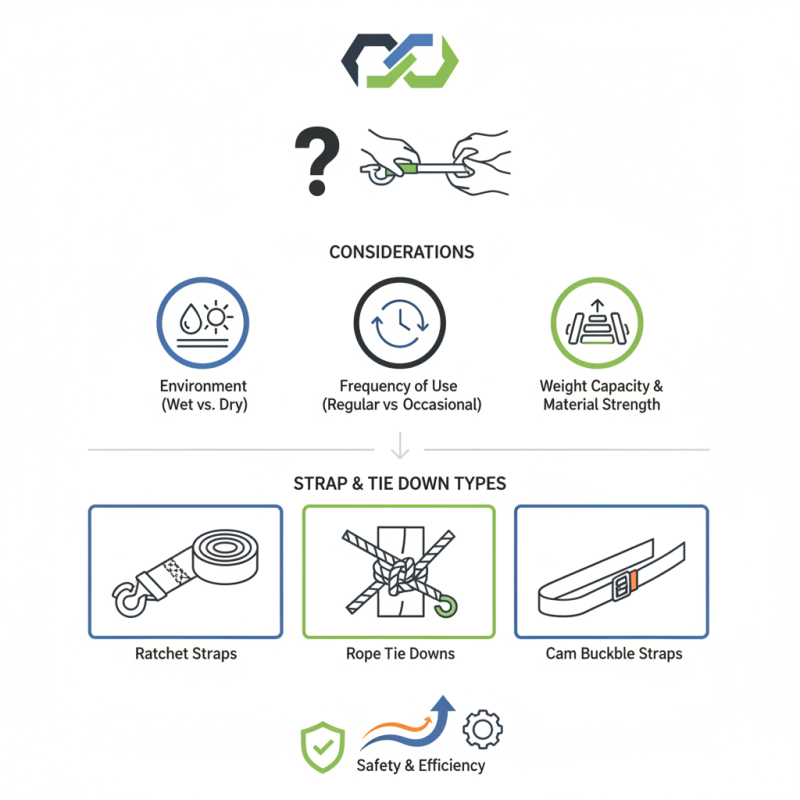
Consider your application carefully. Wet environments may require different materials than dry ones. Furthermore, think about how often you’ll use these straps. Regular use may demand more durable options. Always invest time in research. Straps and tie downs can enhance your workflow, but only if chosen wisely.
How to Choose the Best Straps and Tie Downs for Your Needs?

Identifying Your Specific Needs for Straps and Tie Downs

When choosing straps and tie downs, it's essential to identify your specific needs. Consider the weight and type of items you will secure. Heavy items require robust materials and designs. Thinner straps may work for lighter, less bulky cargo. Think about the environment too. Outdoor use might demand weather-resistant options, while indoor use allows for more flexibility.

Assess the features you prioritize. Do you need quick-release mechanisms or adjustable lengths? These specifications can significantly influence your convenience during loading and unloading. Also, consider the length of the strap. A too-short strap can be frustrating. Getting the correct length ensures reliability.

An often-overlooked aspect is the average user’s experience. Many find that their first choice doesn't always meet their needs perfectly. This can lead to trial and error. Reflect on why certain straps failed you in the past. Was it the weight limit or the material quality? Learning from these experiences helps refine your choices.

Understanding Different Types of Straps and Tie Downs Available

When choosing straps and tie downs, understanding the different types available is crucial. There are several categories, each designed to suit specific needs. For instance, cam straps are great for securing a load quickly. Their easy tension adjustment makes them user-friendly.

Ratchet straps offer added security for heavier loads. They tighten down firmly, reducing the risk of shifting during transport.

Elastic straps, on the other hand, are versatile but may not be suitable for heavy-duty applications. They provide flexibility, ideal for lightweight uses.

Also, consider material. Nylon is durable and resistant to UV damage. However, it may wear out faster under heavy loads compared to polyester. Reflecting on the purpose and weight of the items you plan to secure can guide your choice.

Additionally, length and width matter. Short straps work for small loads, while longer ones provide flexibility for larger items. However, longer straps can be cumbersome and may require more storage space. It's essential to assess the trade-offs in your selection process to ensure safety and efficiency. Finding the right balance will enhance your overall experience and effectiveness in securing your cargo.

Assessing Material Quality and Durability for Longevity

When selecting straps and tie downs, material quality is crucial. The right materials ensure that your equipment meets safety standards. Common materials include polyester, nylon, and polypropylene.

Polyester straps are known for their higher UV resistance and lower stretch rates. Nylon offers excellent elasticity, but it can degrade more quickly in sunlight.

A recent industry report highlights that over 30% of tie-down failures are due to material fatigue. This underscores the importance of assessing durability. Look for straps that feature reinforced stitching and weather-resistant coatings. The strength of a strap is also indicated by its break strength rating, which should exceed the load weight.

Regular wear and tear are inevitable. Users must assess their gear regularly. Check for frayed edges, discoloration, or any visible damage. A compromised strap might not perform effectively under stress.

It’s essential to invest in straps that might come at a higher cost but offer longer life and reliability. Thus, understanding these material characteristics forms the foundation for effective and safe tie-down solutions.

Evaluating Load Capacity and Safety Ratings for Your Application

When evaluating load capacity, consider both the weight of your cargo and the working load limit (WLL) of your straps. Reports indicate that using straps with inadequate load ratings can result in accidents. A study by the National Institute for Occupational Safety and Health (NIOSH) emphasizes proper assessment of gear in transport. It highlights that straps should exceed the load weight by at least 50% for added safety.

Safety ratings are also critical. Check for compliance with industry standards like the American National Standards Institute (ANSI) regulations. Many accidents could have been prevented with better adherence to safety protocols. Inspect your tie-downs regularly for wear and tear. Even slight fraying can compromise their effectiveness.

Ensure your choice of tie-downs suits the specific application. For example, lighter loads may benefit from cam buckle straps, while heavier items might require ratchet straps. Consider these factors carefully to avoid unexpected failures. Accurate assessment not only ensures safety but also enhances efficiency in transport operations. Thus, an informed choice is essential for both personal and commercial needs.

Comparing Features and Pricing to Find the Best Value Options

When considering straps and tie downs, various features can greatly influence your choice. Look for materials and construction. A strong nylon or polyester strap is vital for durable use. Check if the tie downs have reinforced stitching, as this can enhance longevity. Load capacity is another key factor. Make sure the straps can handle the weight you plan to secure. Don't overlook the design of the buckle or hook. A reliable locking mechanism ensures safety during transport.

Pricing varies widely across options. Setting a budget helps narrow choices. However, a lower price does not always equate to poor quality. Sometimes, brands compromise on features, sacrificing reliability. It’s wise to invest in straps with a proven track record. Read reviews and ratings from users. Their experiences provide valuable insight into the product's performance. Remember, spending a bit more could mean fewer headaches in the long run.

Consider how often you will use the straps. For frequent use, a higher-quality product is worth it. Track your potential purchases and reflect on your choices. Have there been past mistakes? Learning from prior experiences can guide you. The right tie downs should meet your needs without breaking the bank. Quality over quantity is essential here; a few reliable straps can be more beneficial than a bulk of lower-grade options.

FAQS

: What types of straps are commonly available?

: There are several types, including cam straps, ratchet straps, and elastic straps. Each serves different purposes.

Why are cam straps user-friendly?

Cam straps allow for quick load securing. Their easy tension adjustment makes them simple to use.

What should I consider when selecting strap material?

Think about durability. Polyester is UV resistant, while nylon is elastic but degrades faster under sunlight.

How does strap length affect my choice?

Short straps work for small loads. Longer straps offer flexibility, but they may take up more space.

Why is assessing material quality important?

Material quality ensures safety. It affects longevity and performance, so check for reinforced stitching and coatings.

How can I assess strap condition?

Regularly inspect for frayed edges or discoloration. Any visible damage might indicate a compromised strap.

What factors influence strap pricing?

Features, materials, and load capacity all affect price. A lower price doesn’t always mean poorer quality.

Should I consider user reviews?

Yes, user experiences provide insights. They can help you understand a product's performance and reliability.

How often should I check my straps?

Regular assessments are necessary. Frequent inspections help identify wear and prevent potential failures.

What’s the importance of load capacity in strap selection?

Choosing straps that can handle your load weight is crucial. This ensures safety during transport and use.

Conclusion

When selecting the best straps and tie downs for your needs, it is essential to start by identifying your specific requirements, such as the type of cargo you'll be securing and the environment in which you'll use them. Understanding the various types of straps and tie downs available will help you make an informed decision.

Next, assess the material quality and durability of the options you consider to ensure they will stand the test of time. Evaluating load capacity and safety ratings is crucial for ensuring that your chosen straps and tie downs will safely support the weight of your cargo. Finally, comparing features and pricing will help you find the best value options that meet your needs without compromising on safety or reliability.

Charlotte

Charlotte

Charlotte is a seasoned marketing professional with a deep understanding of the company's portfolio and a passion for elevating its presence in the market. With a keen eye for detail and a commitment to excellence, she ensures that our professional blog is regularly updated with insightful articles......