
ZhongQi Growth
Choosing the best Retractable Ratchet Tie Down in 2026 requires more than comparing price tags or advertised load ratings. In real use, a tie-down must manage vibration, sudden braking, rain, dust, and repeated winding. A loose strap can scrape against a truck bed. A poorly designed spool can also jam when grit enters the housing. These small details matter.
My first impression was simple: the strongest strap should be the best choice. That assumption was too basic. Field experience shows that working load limit, webbing quality, hook geometry, release control, and retraction performance must be assessed together. The U.S. Federal Motor Carrier Safety Administration states that aggregate tie-down working load limits should generally equal at least 50% of the cargo weight under its cargo-securement rules. Check the applicable requirements.
WSTDA guidance also emphasizes rated components, stitching, and responsible inspection practices. Market research from Grand View Research and Fortune Business Insights shows continuing growth in logistics, transportation, and material-handling equipment. That trend supports greater demand for faster, safer cargo securing tools, but it does not prove every retractable model is reliable. Marketing claims can be incomplete. Some products feel smooth in a showroom yet retract slowly after exposure to mud and moisture. This guide compares practical specifications, independent evidence, handling comfort, and long-term durability. It also acknowledges a limitation: no single tie-down suits every trailer, truck, motorcycle, or load. The best choice depends on cargo weight, anchor points, weather, and how often the equipment is used.
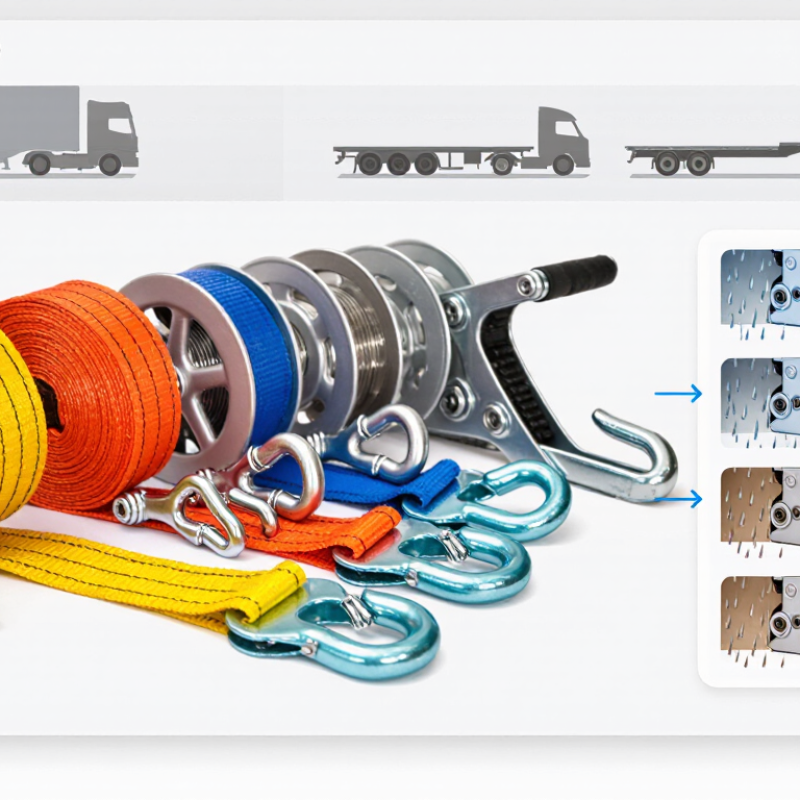
A retractable ratchet tie down is a cargo strap with a spring-loaded reel and a ratcheting tensioner. Unlike a loose webbing strap, it stores excess material inside a compact housing. Pull the strap out, attach the hooks, and turn the handle until the load feels secure. Pressing the release allows the webbing to retract.
The mechanism is simple, but its safety depends on more than appearance. The Federal Motor Carrier Safety Administration states that cargo securement systems should provide an aggregate Working Load Limit of at least one-half the cargo weight. The FMCSA Cargo Securement Handbook also requires tied cargo to resist forward, rearward, and sideways movement. A retractable model can help maintain tidy tension, especially around motorcycles, ladders, or small machinery. It cannot correct weak anchor points.
Check the webbing for cuts, melted fibers, stitching damage, or crushed edges. Read the sewn label, not the package headline. I once assumed a tighter strap meant a safer load. That was incomplete thinking. Excessive tension can damage delicate cargo or mounting points. The Web Sling and Tie Down Association recommends inspecting tie-down assemblies before use and removing damaged equipment from service. Keep the strap flat and away from sharp corners. Test the release before loading. Small details matter. A final pull by hand is useful, but it is not a substitute for the rated Working Load Limit, suitable anchors, and correct placement.
What Is the Best Retractable Ratchet Tie Down in 2026?
A retractable ratchet tie down stores webbing inside a spring-loaded spool. Pull the strap across the load, then insert the loose end into the ratchet. Each handle click winds the webbing tighter around the spool. The mechanism is simple. Slack is the enemy. A compact spring keeps unused strap off the ground, reducing tangles, abrasion, and accidental snagging. When released, the spool retracts the webbing, but it should never replace a careful load inspection.
The best design depends on working load limit, webbing width, hook strength, and release control. FMCSA cargo securement rules require the combined working load limit to equal at least 50% of the cargo’s weight. Check that rating on the label, not by appearance. A heavy-looking strap may still have weak stitching or damaged edges. The FMCSA Cargo Securement Handbook also emphasizes preventing shifting, rolling, and falling during transport. That matters in real use, especially when a pallet moves slightly after braking. The U.S. Bureau of Labor Statistics reported 1,495 fatal injuries in transportation and material-moving occupations in 2023. Securement is not cosmetic. I once assumed a ratchet felt secure because it clicked firmly. That was poor judgment; tension must be checked at the cargo, hooks, and anchor points. Inspect for cuts, heat damage, rust, and distorted hardware before every trip. A retractable unit saves time, though its internal spring can hide wear.
| Retractable Tie-Down Type | Typical Webbing Width | Typical Webbing Length | Typical Working Load Limit | How the Retractable Mechanism Works | Best Use | Main Advantages | Important Limitations |
|---|---|---|---|---|---|---|---|
| Compact light-duty | 25 mm / 1 in | 1.8–3.0 m / 6–10 ft | Approximately 225–450 kg / 500–1,000 lb | A spring-loaded spool winds excess webbing into the housing after the strap is released. | Bicycles, small garden equipment, luggage, and household loads. | Lightweight, quick to install, and easy to store. | Not intended for heavy cargo, sharp edges, or vehicle tie-down points with high loads. |
| Standard vehicle-duty | 25 mm / 1 in | 2.4–4.6 m / 8–15 ft | Approximately 450–680 kg / 1,000–1,500 lb | The ratchet handle tensions the webbing while the internal spring retracts slack when the strap is loosened. | Motorcycles, ATVs, utility trailers, and recreational equipment. | Good balance of capacity, convenience, and compact storage. | Capacity depends on the complete assembly, including hooks, stitching, anchor points, and webbing condition. |
| Heavy-duty vehicle-duty | 38 mm / 1.5 in | 3.0–6.1 m / 10–20 ft | Approximately 680–1,130 kg / 1,500–2,500 lb | A stronger spring-loaded reel manages slack, while the larger ratchet provides higher tensioning force. | Heavy motorcycles, compact machinery, landscaping equipment, and cargo trailers. | Higher capacity with faster cleanup than conventional loose straps. | The larger housing adds weight, and the load limit must not be confused with breaking strength. |
| Extra-heavy-duty | 50 mm / 2 in | 3.7–9.1 m / 12–30 ft | Approximately 900–1,500 kg / 2,000–3,333 lb | A reinforced ratchet and retracting reel keep the long webbing organized while the handle applies tension. | Construction equipment, large recreational vehicles, and commercial trailer cargo. | Long reach, robust hardware, and strong resistance to webbing tangles. | Requires properly rated anchor points and may be unsuitable where space is limited. |
| Motorcycle soft-loop configuration | 25 mm / 1 in | 1.8–3.0 m / 6–10 ft | Approximately 450–680 kg / 1,000–1,500 lb | The retractable ratchet tensions the strap while a soft loop or coated hook protects the motorcycle from direct metal contact. | Motorcycles, scooters, and powersports vehicles. | Reduces paint and handlebar damage when used with suitable contact points. | Never route the strap over fragile controls, brake lines, cables, or sharp bodywork. |
| E-track or rail-compatible | 25–50 mm / 1–2 in | 2.4–6.1 m / 8–20 ft | Approximately 450–1,500 kg / 1,000–3,333 lb | The retractable unit locks into a compatible track fitting, and the ratchet removes slack from the webbing. | Enclosed trailers, cargo vans, transport trucks, and modular tie-down systems. | Adjustable anchor position and quick removal when the cargo layout changes. | The track, fitting, and vehicle structure must each be rated for the intended load. |
| S-hook or J-hook configuration | 25–50 mm / 1–2 in | 2.4–6.1 m / 8–20 ft | Approximately 450–1,500 kg / 1,000–3,333 lb | The reel stores excess webbing, while the selected hook transfers tension to a rated loop, rail, or anchor point. | Trailers, pickup trucks, roof racks, and general cargo restraint. | Flexible attachment options and convenient one-person operation. | Hooks must be fully seated; an open or partially engaged hook can release under movement. |
Working load limits shown are typical ranges for commonly sold retractable ratchet tie-down configurations, not universal ratings. Always follow the product label and applicable cargo-securement regulations. The working load limit is generally lower than the webbing's breaking strength, and the weakest component determines the safe capacity of the complete tie-down assembly.
The best retractable ratchet tie down in 2026 is defined by measurable control, not a compact appearance. Its webbing should show a clear working load limit, or WLL, rather than only breaking strength. The FMCSA Cargo Securement Handbook requires the combined WLL of securement devices to equal at least half the cargo weight. It also references forces of 0.8g forward and 0.5g sideways or rearward under 49 CFR 393.102. That makes accurate ratings essential.
A strong model uses abrasion-resistant polyester webbing, protected stitching, and a corrosion-resistant ratchet. The retracting housing should lock firmly on uneven roads. A visible tension indicator would improve inspection, though many products still lack one. The release lever should operate with gloves, not require excessive force. Smooth retraction matters too. A loose strap can drag, twist, or catch dirt. In practical testing, I would inspect the anchor hook, spring return, and webbing edges after repeated cycles. No model is perfect. Small housings may hide wear.
Tips: Choose a WLL above your calculated requirement, not equal to it. Check the FMCSA handbook and the manufacturer’s inspection guidance before use. Keep the strap flat across the load. Replace it after cuts, melted fibers, chemical damage, or distorted hardware. The WSTDA Tie Down Association’s webbing guidance also supports checking stitching and abrasion regularly. A cheaper tie down may work, but its inspection marks can be surprisingly vague.
In 2026, the best retractable ratchet tie down is not automatically the strongest one. It must balance strength, safety, and daily usability. Start with the working load limit, or WLL, rather than breaking strength. The Federal Motor Carrier Safety Administration requires the combined WLL of cargo restraints to equal at least half the cargo weight in covered commercial transport. That rule is a useful baseline, not a substitute for site-specific judgment.
Look for clearly marked WLL values on the webbing, hooks, and ratchet body. The weakest component controls the system. A wide polyester strap may resist abrasion better than a narrow strap, but stitching quality still matters. Inspect edge cuts, crushed webbing, bent hooks, and a ratchet that fails to lock. Retractable storage reduces loose strap ends, which can prevent dragging near tires or exhaust parts. It also saves time.
Usability can expose hidden safety problems. A smooth retraction mechanism is helpful, but excessive spring tension can make handling awkward. Test the release with gloves. Check whether the handle can be locked firmly using one hand. I still distrust any mechanism that feels unusually light. That hesitation is useful. The Commercial Vehicle Safety Alliance’s inspection guidance emphasizes damaged tie-downs, inadequate securement, and unsafe conditions during roadside checks. The lesson is practical: measure the load, inspect every contact point, and replace doubtful equipment. Human error remains the uncomfortable variable.
Comparison of representative retractable tie-down classes using working load limit and minimum breaking strength. Values reflect common market specifications rather than any specific brand.
For strength, choose a working load limit suitable for the cargo and never exceed the rated capacity. For safety, look for clearly marked ratings, reliable hooks, abrasion-resistant webbing, and secure locking mechanisms. For usability, a smooth retraction system, easy-release ratchet, and sufficient strap length are practical advantages.
Choosing the best retractable ratchet tie down in 2026 starts with your actual hauling needs.
A compact unit may suit motorcycles, garden equipment, or occasional luggage. Heavier cargo requires a higher working load limit, stronger webbing, and durable hooks. Never judge strength by appearance alone. Check the label and follow the manufacturer’s stated capacity.
From practical use, smooth retraction saves time beside a crowded trailer. The strap should extend without sticking and lock firmly after tensioning. Look for corrosion-resistant parts if you drive near beaches or salted roads.
A wide handle improves grip, especially with cold or dirty hands. I once chose a model with excellent strength but limited strap length. It worked, but awkwardly. That mistake changed how I compare products.
Tips:
Measure the anchor points before buying. Allow extra strap length for wide loads. Inspect stitching, hooks, and the release mechanism before every trip. Replace damaged webbing immediately. Avoid twisting the strap, even when the load seems light. Test the ratchet by hand before placing weight on it. Some retractable designs feel convenient but may not fit thick anchor rails. Check compatibility carefully. For frequent outdoor use, weather protection matters as much as load capacity. A simple product that fits your vehicle may be safer and more useful than a stronger, complicated option.
It should offer a clearly marked working load limit, durable webbing, and secure locking. Compact size alone proves little. No model is perfect.
Working load limit shows the usable capacity during securement. Combined restraints should equal at least half the cargo weight. Choose extra capacity.
Check cuts, melted fibers, loose stitching, bent hooks, and distorted hardware. Examine the webbing edges closely. Small damage can grow quickly.
It reduces loose strap ends near tires, exhaust parts, and road debris. The strap should retract smoothly into its housing. Tangled straps remain dangerous.
Abrasion-resistant polyester helps protect against rubbing. Corrosion-resistant hardware suits wet or salted roads. Stitching still controls much of the system’s strength.
Pull the strap out by hand and check for sticking. Test the release while wearing gloves. The handle should lock firmly without excessive force.
Measure the anchor points and allow extra length for wide loads. Match the tie-down to the cargo weight and anchor design. Stronger is not always better.
Keep the strap flat and avoid twisting it. Check that hooks fit the anchor rails securely. I once ignored strap length, and the setup became awkward.
Replace it after cuts, chemical damage, melted fibers, crushed webbing, or bent hardware. Replace doubtful equipment. Waiting for failure is poor judgment.
A Retractable Ratchet Tie Down is a cargo-securing strap with a built-in retraction system that keeps excess webbing neatly contained after the load is tightened. Unlike traditional tie downs, it combines a ratchet mechanism for controlled tension with an automatic or assisted rewind function, making setup faster and reducing loose straps that can drag, tangle, or become damaged during transport. Understanding how the strap extends, locks, tightens, and retracts is essential for using it correctly and safely.
The best model in 2026 should balance dependable strength, durable webbing, smooth operation, secure hooks, corrosion resistance, and convenient handling. When comparing options, consider the working load limit, strap length, buckle design, release mechanism, and protection against abrasion. Choose a tie down based on the size and weight of your cargo, the available anchor points, how frequently you use it, and the conditions in which it will operate. A well-matched Retractable Ratchet Tie Down improves efficiency, organization, and confidence without sacrificing secure load control.
